October 2026 at Bindplane: First-class Gateways, three new destinations, and a three-tab Overview
Gateways are the headline this month. Three new destinations, a three-tab Overview page, and three smaller fixes round it out. Here is the rundown.

Gateways are now a named resource in Bindplane with their own page, a guided setup, and a one-step migration for anything already running the Bindplane Gateway source. Around that we added destinations for CrowdStrike Falcon Next-Gen SIEM, Arize AX, and Arize Phoenix, gave the Overview page a third tab.
▶️ Prefer to watch? The October Community Call is streamed live on YouTube. 👇
What shipped
Gateways are the headline. Most deployments of any size already have a gateway tier. A few collectors sit between the edge and the destinations, take the fan-in, run the heavy processors, and forward. Until now that tier was something you assembled by hand. One configuration, one Bindplane Gateway source, a matching destination on every edge config, and a mental note about which collectors belonged to it.
Bindplane makes it easier now. A Gateway is a named group of gateway collectors that sits between your edge collectors and your destinations. Open Gateways in the navigation, pick Kubernetes or load-balanced VMs, name it, and choose a collector type. Bindplane creates the configuration and the linked Bindplane Gateway destination for you, then walks you through four steps. Provision the infrastructure, install the collectors, enter the hostname your edge collectors will use, publish.
The Gateway page shows throughput, collector status and versions, and every member collector. Read the Gateways docs.

Already running a gateway? You don’t need to rebuild it. Every configuration using the Bindplane Gateway source now shows a migration banner. Accept it and Bindplane creates the Gateway resource, assigns the configuration, and moves the collectors over in one step, with throughput on the new Gateway.
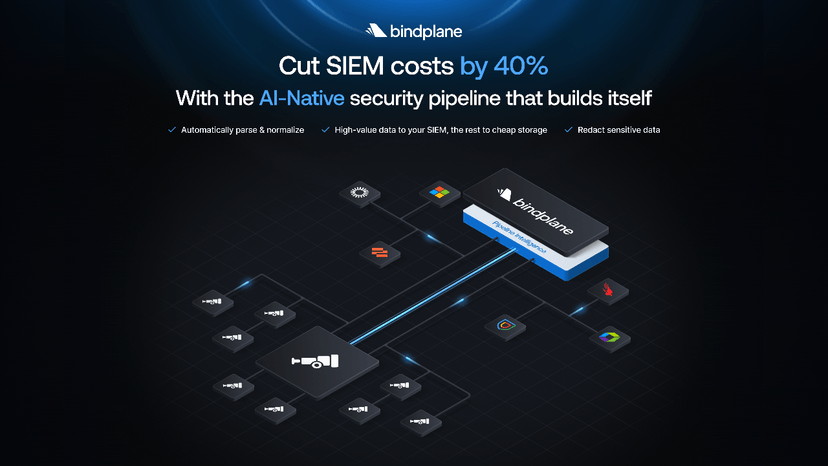
The other big change is three new destinations. CrowdStrike Falcon Next-Gen SIEM takes logs. The pattern is the one we recommend for every SIEM. Filter and reduce in the collector, send the security-relevant subset to Falcon, route the rest to cheaper storage, all before any of it reaches the SIEM bill.
Arize AX and Arize Phoenix take traces. If you instrument LLM applications or agents with OpenTelemetry, you now have a managed path into either platform, with the same processors in front that you use everywhere else.
The Overview page now has three tabs. Data Flow is the newest addition and shows the whole deployment as one graph with live throughput on every edge. Topology shows how configurations, Gateways, and destinations connect. Summary is the operational view. Collector health, rollout status, version drift, and throughput over 24 hours, 30 days, or 90 days.

New features and integrations
Three more worth knowing about.
Upgrade disconnected collectors. Upgrading a disconnected collector is marked Upgrade pending and the upgrade applies the moment it reconnects. It works per collector and per fleet, and you can cancel a pending upgrade.
Leave a project or organization yourself. Users can now leave a project or an organization without an admin doing it for them. The action is role-aware, so the last user in a project or org cannot lock everyone else out.
Dynatrace Enrichment processor. It sets the Dynatrace primary fields, dt.security_context, dt.cost.costcenter, and dt.cost.product, plus organizational tags, as resource attributes before telemetry ever reaches your backend. Put it ahead of every Dynatrace destination. Read the docs, here.
What we wrote and where we showed up
Two posts this month, both about sending less without losing the answer.
How to Filter and Reduce AI Agent Telemetry with OpenTelemetry & Bindplane looks at what Claude Code and similar agents actually emit, and how much of it nobody will ever query. You do not need the transcript in your backend. You need the decisions. The post walks through the processors that keep one and drop the other.
Deduplicate logs at the edge: Same insights, a fraction of the volume, written with Austin Sabel, Sales Engineer at Dynatrace, applies the same idea to repeated log lines. Collapse them in the collector, keep a count, and your dashboards do not notice the difference. Your bill does.
We had a community contribution this month too. Simone Bruzzechesse from Google published Mastering Bindplane CLI and Fleet Management at Scale on the Google Cloud publication on Medium, going from zero to bulk collector migrations with bindplane on the command line. Read it if you manage fleets from a terminal rather than a browser.
New documentation
The docs have a new Core Concepts section. Five pages, one per building block. Collectors, Configurations, Rollouts, Edge Fleets, and Gateways, plus how a collector gets its configuration, how labels track membership, and what a typical edge-to-gateway deployment looks like. If you have ever explained Bindplane to a new teammate with a whiteboard, send them this instead. It is also the right place to start before you create your first Gateway.
What we’re working toward
Next stop is KubeCon + CloudNativeCon North America at the Salt Palace Convention Center in Salt Lake City, November 9 to 12. We will be at Booth 253 talking OpenTelemetry pipelines, OpAMP, and collector fleets at scale. Come say hi.
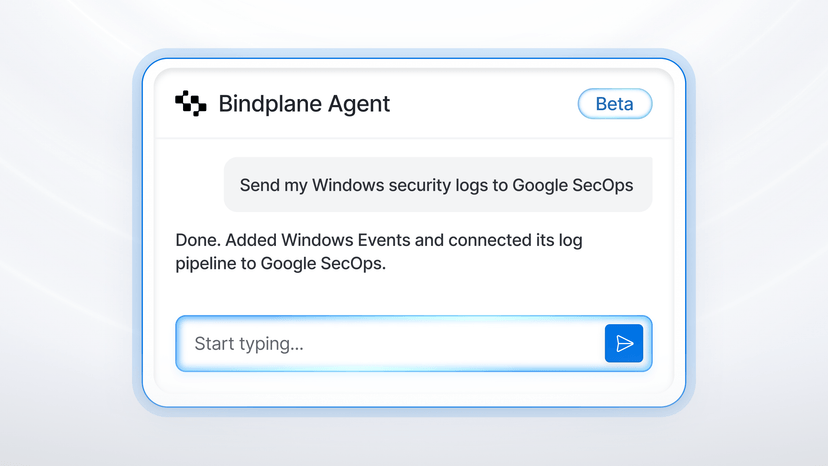
On October 22 I join Frederic Harper on the devrelshow livestream for a live Bindplane demo. You’ll learn about the Bindplane AI Agent, Claude Code telemetry filtering, and log deduplication, in about 15 minutes.
Until then, take the new Gateways flow for a spin. Point one edge config at it, accept the migration banner on an old one, and tell us what breaks. The Bindplane community Slack is the fastest way to reach the team.
See you in November.


 Slack
Slack GitHub
 x.com
x.com LinkedIn